



This product has obtained the aforementioned certifications.
When your makeup takes more work than you planned
The spots still show. Now the makeup does, too.
You add another layer to cover a dark spot. In daylight, it looks heavier than you wanted, and by midday you’re reaching for a touch-up.

Spots still peek through
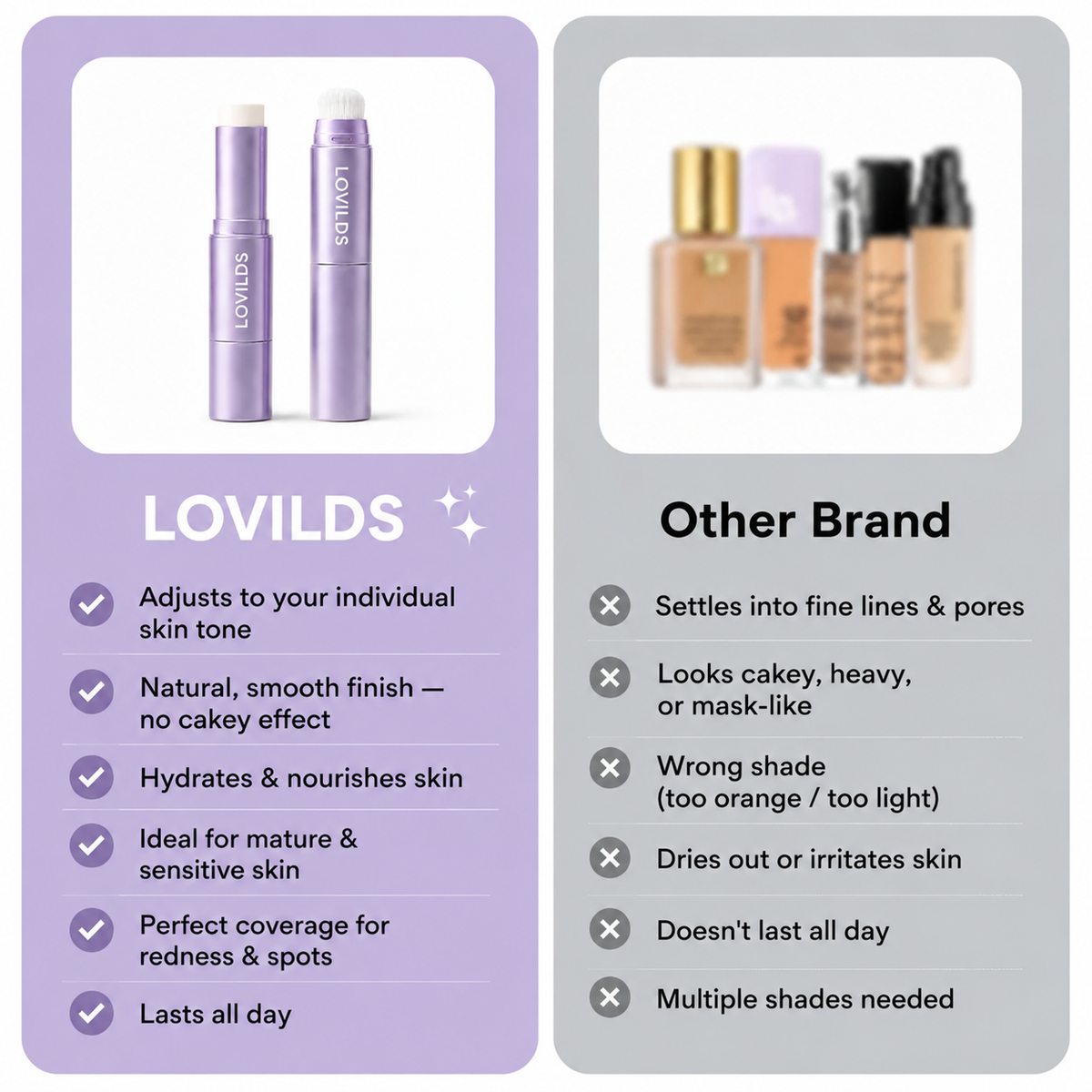
Redness and dark spots show through a light layer. Piling on more can leave a thick, mask-like finish.
Makeup catches and creases
Foundation cakes around the nose, cracks over dry patches and settles into fine lines, making them stand out.
Coverage wears off unevenly
Makeup can separate and sit visibly on the skin. As coverage fades, the spots you covered start to show again.
Coverage where you need it
Soften the look of spots. Keep your skin looking like skin.
Blend a thin layer over visible redness and dark spots. Add a little more only where you need coverage.
Use less around fine lines and dry patches for a lighter finish. If coverage fades during the day, touch up only the spots that need it.
See the shade options

The Healrize® shade and finish guide
Find your shade. Keep the finish light.
Find a shade that blends into your skin, then use the built-in brush to soften the look of redness and dark spots in thin layers.

A lighter touch for mature skin.
- Moisturize first
- Use less around fine lines
- Build coverage on spots

Start with the closest shade.
Choose from three shades. Blend one swipe outward and check the edge next to bare skin.
Keep dry areas light.
Blend sparingly where makeup tends to cake, flake or collect in lines. For sensitive skin, review the ingredients and patch-test first.
Cover spots without a heavy layer.
Tap a little more over visible spots and soften the edges. If coverage fades, touch up just those areas.
Swatch in daylight. Blend in thin layers.
Choose my shadeReference imagery illustrates skin tones and application tips. The swatches are illustrative. Makeup finish varies with shade, skin texture and application.
Choose the coverage for your day
Start with a little. Build only where you want.
A quick touch-up
Cover a few spots.
Place a small amount right on the areas you want to cover, then feather the edges.
A more even base
Blend a thin layer.
Swipe lightly across the areas you want to even out. Add a little more over any spots that still show.
How to apply
Swipe. Blend. Build.
Foundation and a blending brush in one stick.
Swipe lightly
Start on moisturized skin. Use a small amount where you want coverage.
Blend outward
Use the built-in brush in light strokes around your nose and along your jawline.
Build where needed
Tap on a thin second layer over any spots you want to cover a little more.
Pick your routine
Spot coverage or a light base?
| What matters | Spot coverage | A light base |
|---|---|---|
| Where to apply | Visible redness or discoloration | Cheeks, forehead and chin as needed |
| How much | A small dab on each spot | A thin layer over the areas you choose |
| How to blend | Feather the edges into bare skin | Blend outward toward the jawline |
The Healrize® foundation stick
Find your shade.
Choose from the three shades in the product selector, then check the blended finish in daylight.
Back to the shade selectorBefore you order
Your foundation questions, answered.
For help choosing a shade or checking the ingredients, contact BEVVIER support.
Email BEVVIER supportWill it automatically match my skin tone?
Start with the available shade closest to your complexion. Blend a little along your jawline and check it in daylight. The match depends on the shade and your undertone.
What if my skin is sensitive?
Check the ingredient list on the packaging against any ingredients you know you react to. If you try it, start with a small area and stop using it if irritation occurs.
Can I use it on mature or textured skin?
Start with moisturized skin, use thin layers and apply less around natural creases.
Can I use it just on dark spots or redness?
Yes. Blend a small amount over the spot and build with a thin second layer if you want more coverage.
Do I need a separate brush?
The stick has a blending brush on the opposite end.